INTERNATIONAL TRADE LAW
International Trade Law Articles
Customs classification, export controls, sanctions, and the compliance work that keeps cross-border business moving.
427 articles
IP Protection in International Trade Law
Intellectual property is protected in international trade through one global baseline and a set of border tools that enforce it — and for a U.S. business, the …
Keeping Export Classification Codes Current
Export classification codes are not fixed — they change on predictable schedules, and a code that was correct last year can be wrong today. The Harmonized …
Managing Import Quotas: Absolute vs. Tariff-Rate
An import quota limits how much of a specific product can enter the United States during a set period, and managing one comes down to knowing which type of …
MFN vs. National Treatment: WTO Non-Discrimination Rules
Most-favored-nation (MFN) treatment and national treatment are the two non-discrimination pillars of World Trade Organization law, and they police different …
Non-Tariff Barriers in International Trade Law
A non-tariff barrier is any government measure other than a tax that restricts or conditions trade — a quota, a license requirement, a product standard, or a …
Non-Tariff Barriers vs. Tariff Barriers Explained
A tariff barrier is a tax on imported goods; a non-tariff barrier is any other government measure that restricts trade without using a tax — quotas, licensing, …
Prior Disclosure to Customs: How to Cut Penalties
A prior disclosure is a voluntary report to U.S. Customs and Border Protection that you made a mistake on a customs entry — and filing one before CBP opens a …
Product Classification in Import Compliance
Correct product classification — assigning each import its right Harmonized Tariff Schedule (HTS) code — is the foundation of import compliance because that …
PTA vs. FTA: What's the Difference for Importers?
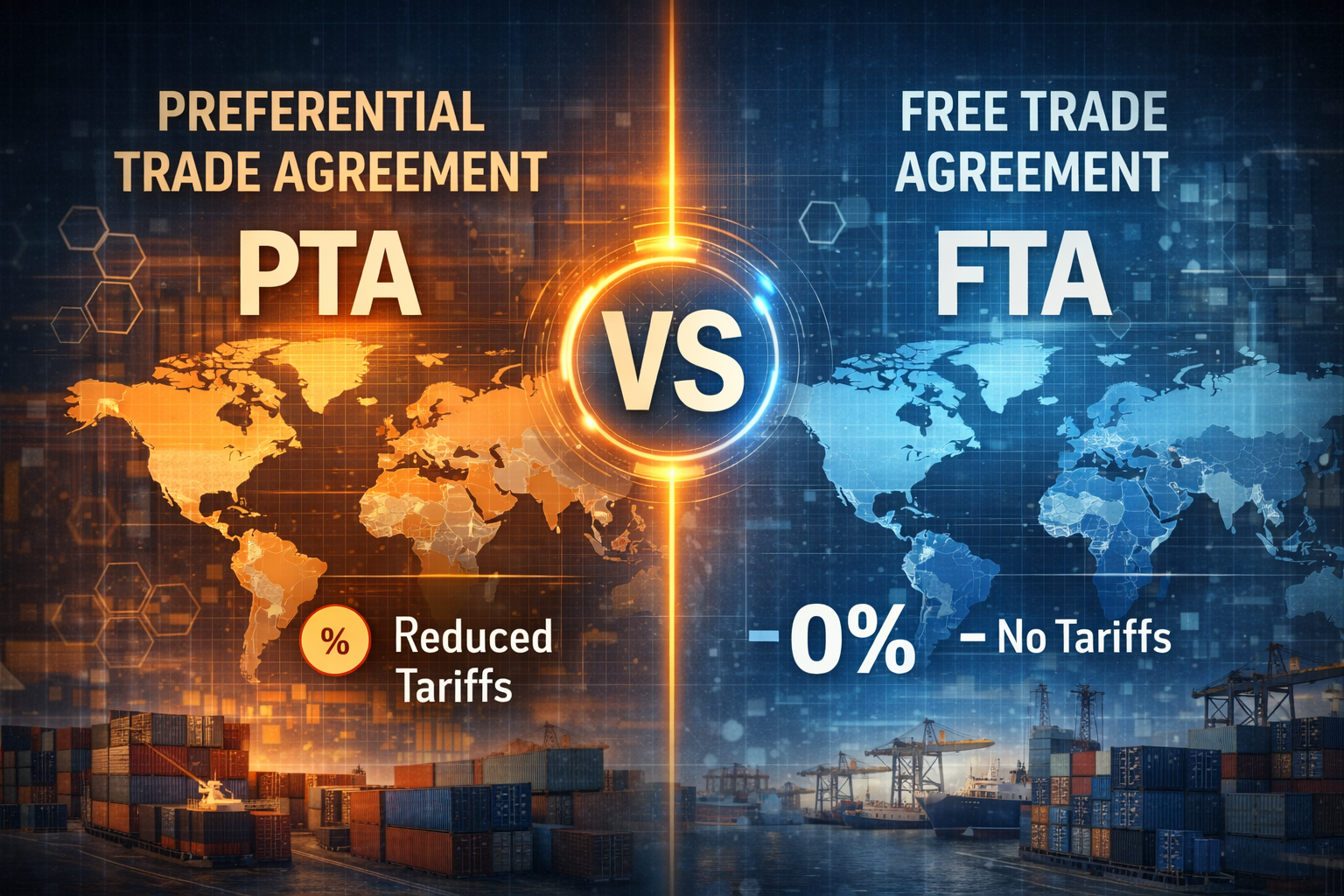
Every free trade agreement is a preferential trade agreement, but not every preferential trade agreement is an FTA. “Preferential trade agreement” …
Rules of Origin vs. Tariff Classification Explained
Rules of origin decide where a good is from; tariff classification decides what a good is — they are two separate customs questions, and every import requires …
Sanctions Compliance Checklist: Build a Program
A sound sanctions compliance program covers five things OFAC treats as essential: management commitment, a risk assessment, internal controls, testing and …
Schedule B Numbers Explained for U.S. Exporters
A Schedule B number is the 10-digit code the U.S. government uses to classify a product for export. It is administered by the U.S. Census Bureau, built on the …
Solving Hard Import Classification Problems
Most import classification disputes trace back to a handful of recurring hard cases — composite goods, parts, sets, and multi-function products — and each has a …
Tariff vs Quota: How Each Limits Imports
A tariff and a quota are two different tools governments use to limit imports — and the distinction is simple but important: a tariff taxes imports, while a …
The FMC and Ocean Shipping: What Importers Should Know
The Federal Maritime Commission (FMC) is the federal agency that regulates U.S. ocean shipping — the carriers, intermediaries, and practices behind goods that …
The Harmonized System (HS) for Export Classification
The Harmonized System (HS) is the six-digit product-coding language used by more than 200 countries to classify traded goods — and it is the foundation of every …
The Harmonized System (HS): Foundation of Import Codes
The Harmonized System (HS) is the international product-coding system, maintained by the World Customs Organization, that gives every traded good a six-digit …
Trade Blocs Explained: Types, Examples, and Rules
A trade bloc is a group of countries that agree to reduce or remove trade barriers among themselves while keeping barriers against outsiders. The members trade …
Trade Compliance and Ethics: A Practical Guide
In international trade, compliance means following the laws that govern moving goods, money, and technology across borders; ethics means the standards a company …
Trade Compliance Basics: A Cheat Sheet
Trade compliance is the practice of following the U.S. laws that govern moving goods, money, and technology across borders — and proving you did. It is not one …