INTERNATIONAL TRADE LAW
International Trade Law Articles
Customs classification, export controls, sanctions, and the compliance work that keeps cross-border business moving.
427 articles
FDA Food Import Rules: A Compliance Guide
Importing food into the United States means meeting four core FDA requirements: register the foreign facility, file Prior Notice for every shipment, maintain a …
FDA Import Alerts: How DWPE Detention Works
An FDA import alert is a published notice that tells FDA field staff to detain specific products, from specific firms or countries, without physically examining …
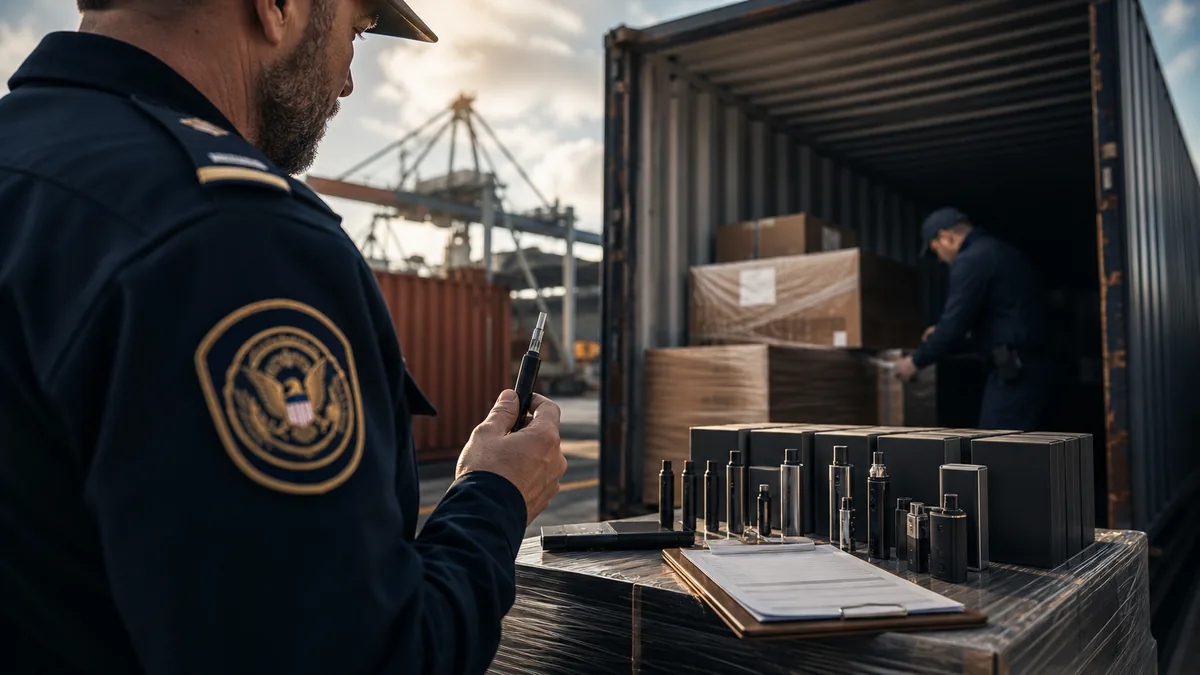
FDA Import Rules for E-Cigarettes and Vapes
An e-cigarette can only enter the United States legally if the FDA has authorized it for marketing — and the agency has authorized only a small fraction of the …
FDA Import Rules for Medical Devices
To import a medical device into the United States, the device must clear FDA’s premarket requirements and its makers and importers must be registered and …
FDA Notice of Refusal: An Importer's Guide
A Notice of Refusal is the FDA’s final decision that an imported product cannot enter the United States. It is issued under Section 801(a) of the Federal …
FSMA Import Rules: FSVP for Importers
The Food Safety Modernization Act (FSMA) shifted U.S. food safety from reacting to outbreaks to preventing them — and for importers, its most important piece is …
FSVP Compliance: Surviving an FDA Importer Audit
An FSVP audit is the FDA’s check that you, the U.S. importer, have a written Foreign Supplier Verification Program proving each foreign supplier produces …
How to Build an Import Compliance Program
An import compliance program is the documented system you use to exercise “reasonable care” — the legal standard CBP holds every importer of record …
Importing Counterfeits: The Legal Risk
Importing counterfeit goods — even unknowingly — exposes you to seizure of the merchandise, a civil fine that can reach the full retail value of the genuine …
Importing Gluten-Free Food: FDA Rules
To label imported food “gluten-free,” it must contain less than 20 parts per million (ppm) of gluten and meet the FDA’s definition of the term …
Importing Medical Devices: FDA Rules for Imports
To import a medical device into the United States, the device must clear FDA’s premarket requirements for its risk class, the manufacturer and importer …
Importing Tobacco Products: FDA Rules
Imported tobacco products — cigarettes, cigars, smokeless tobacco, and electronic nicotine delivery systems (ENDS) like e-cigarettes and vapes — must meet the …
OFAC Sanctions Licensing: General vs. Specific
An OFAC license is permission from the U.S. Treasury to do a transaction that sanctions would otherwise prohibit. The Office of Foreign Assets Control (OFAC) …
Tariff Classification Basics: HTS Codes Explained
Tariff classification is the process of assigning each imported good a code from the Harmonized Tariff Schedule of the United States (HTSUS) — and that code …
USMCA Import Guide: Rules of Origin & Compliance
To import goods duty-free under the USMCA, your product must meet the agreement’s rules of origin and travel with a valid certification of origin — and …
What Is Electronic Export Information (EEI)?
Electronic Export Information (EEI) is the set of data a U.S. exporter must file electronically with the government for many international shipments. It is …
19 U.S.C. 1592 Customs Penalties: What to Know
Section 1592 is the federal statute U.S. Customs uses to penalize importers for material false statements or omissions on entry — it is a civil penalty law, not …
Anti-Dumping & Countervailing Duties Explained
Anti-dumping (AD) and countervailing duties (CVD) are special tariffs the United States adds on top of normal duties to cancel out the price advantage of …
Anti-Dumping & Countervailing Duties: A Guide
Anti-dumping and countervailing duties are extra import duties the U.S. imposes to offset unfairly low-priced or government-subsidized foreign goods. An …
Bonded Warehouse Applications to CBP: How to Apply
A bonded warehouse is a facility authorized by U.S. Customs and Border Protection (CBP) where imported merchandise can be stored — for up to five years from the …