INTERNATIONAL TRADE LAW
FDA Import Rules for E-Cigarettes and Vapes
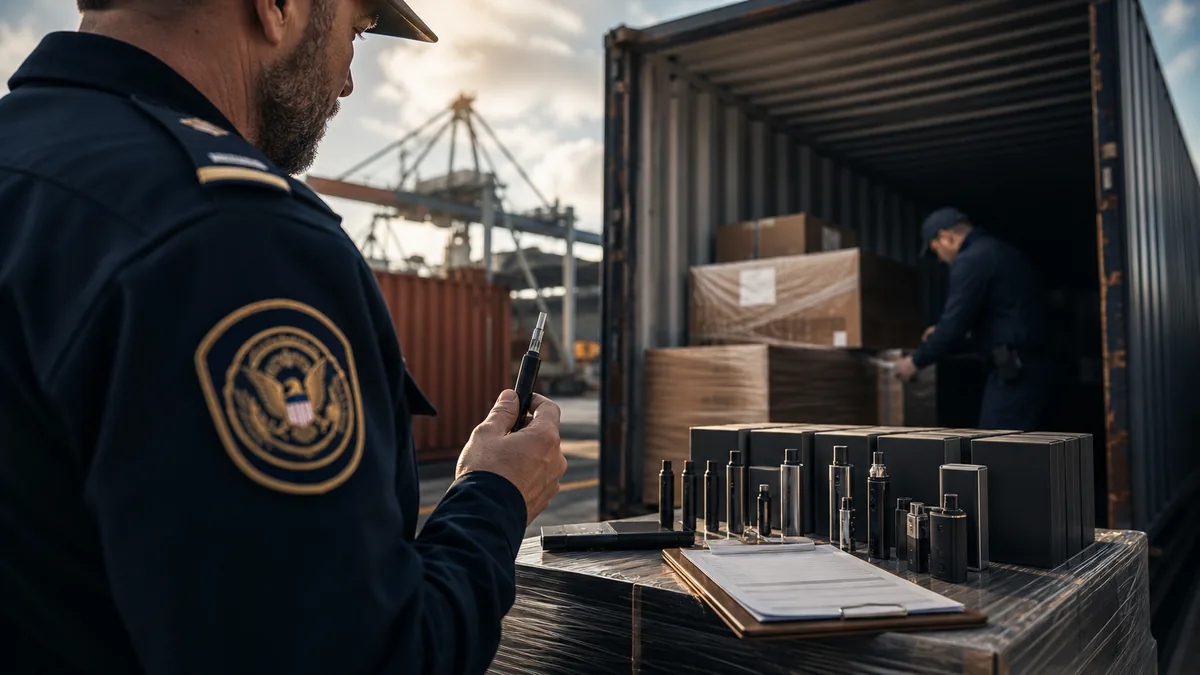
An e-cigarette can only enter the United States legally if the FDA has authorized it for marketing — and the agency has authorized only a small fraction of the products on the market. That single fact controls e-cigarette imports. The FDA regulates vapes as tobacco products, not as ordinary consumer goods, so the question at the border is not whether the device is safe or well-labeled. It is whether the specific product has FDA marketing authorization. If it does not, the shipment is subject to detention and refusal.
Importers who treat vapes like any other consumer import are caught off guard by this. The compliance gate is the premarket authorization, and almost everything else follows from it.
Why Vapes Are Regulated as Tobacco Products
In 2016 the FDA issued the “deeming rule,” which brought electronic nicotine delivery systems (ENDS) under its tobacco authority. The term ENDS covers e-cigarettes, vape pens, e-cigars, e-hookahs, e-liquids, and their components. Under the deeming rule these are “new tobacco products” subject to Chapter IX of the Federal Food, Drug, and Cosmetic Act — the same premarket review, adulteration, and misbranding provisions that apply to cigarettes and smokeless tobacco.
The practical consequence: a new tobacco product cannot be legally marketed in the U.S. unless it has gone through an FDA authorization pathway. For most e-cigarettes, that pathway is the Premarket Tobacco Product Application (PMTA). Products that were on the market as of August 8, 2016 were generally required to file a PMTA, and a product without marketing authorization is not legal to sell — or to import for sale.
The Two-Agency Gate at the Border
E-cigarette imports pass through two agencies, and an importer has to satisfy both. CBP handles the entry; the FDA decides admissibility. CBP routes FDA-regulated entries to the FDA, which can detain, examine, and refuse them.
| Agency | Role at import |
|---|---|
| CBP | Processes the customs entry; you must be a proper importer of record |
| FDA | Reviews the product’s tobacco status; detains and refuses unauthorized ENDS |
If the FDA finds a product “appears to violate” the law — for example, an ENDS product with no marketing authorization — it issues a notice of detention, and then a notice of refusal if the problem is not resolved. Refused goods must be exported or destroyed. See FDA notice of detention and FDA notice of refusal for how those steps work, and what is an importer of record for the customs side.
Import Alerts: Detention Without Physical Exam
The sharpest tool here is the import alert. When the FDA identifies products or producers that have violated the rules, it can place them on an import alert that authorizes “detention without physical examination” — FDA staff can hold those shipments on sight, shifting the burden to the importer to prove the goods are admissible. Unauthorized ENDS have been a focus of this enforcement. The takeaway for importers: once a product or manufacturer lands on an alert, every shipment becomes a fight, and the time to check is before you order, not after the goods are detained. For the mechanics, see FDA import alerts and FDA import enforcement.
What an Importer Should Verify First
Before committing to a vape shipment, confirm the product can lawfully enter. The order of these questions matters — the authorization question comes first because nothing else saves an unauthorized product.
- Does the specific product have FDA marketing authorization, or a pending application that the FDA is allowing to remain on the market? Only a limited set of ENDS products have been authorized as of 2026.
- Is the product, manufacturer, or shipper named on an FDA import alert?
- Are the FDA registration, product listing, and tobacco-product requirements met by the responsible parties?
- Is your customs entry correct — proper importer of record, classification, and FDA entry data?
A “no” or an “unknown” on the first two questions usually means the shipment will not clear, regardless of how well the rest is documented.
Frequently Asked Questions
Can I import e-cigarettes into the U.S. for resale? Only if the specific product has FDA marketing authorization (or qualifies under a pathway the FDA is permitting). The FDA has authorized a limited number of ENDS products, and unauthorized products are subject to detention and refusal at the border.
Why does the FDA regulate vapes as tobacco products? The 2016 deeming rule placed ENDS under the FDA’s tobacco authority. That makes e-cigarettes “new tobacco products” requiring premarket authorization, typically through a PMTA, before they can be legally marketed or imported for sale.
What is an import alert? An FDA enforcement tool that lets the agency detain a product, manufacturer, or shipper’s goods without a physical exam. Many unauthorized ENDS fall under import-alert enforcement, so a flagged product is held on arrival.
What happens to a refused shipment? After a notice of detention and an unresolved hearing, the FDA issues a notice of refusal. Refused goods cannot enter U.S. commerce and must be exported or destroyed, at the importer’s cost.
Importing FDA-regulated products? Reidel Law Firm prepares flat-fee import/export compliance memos and advises importers facing FDA detentions, with direct attorney access. Get an import/export compliance memo →