FRANCHISE LAW
Franchise Build-Out Costs and Construction Checklist
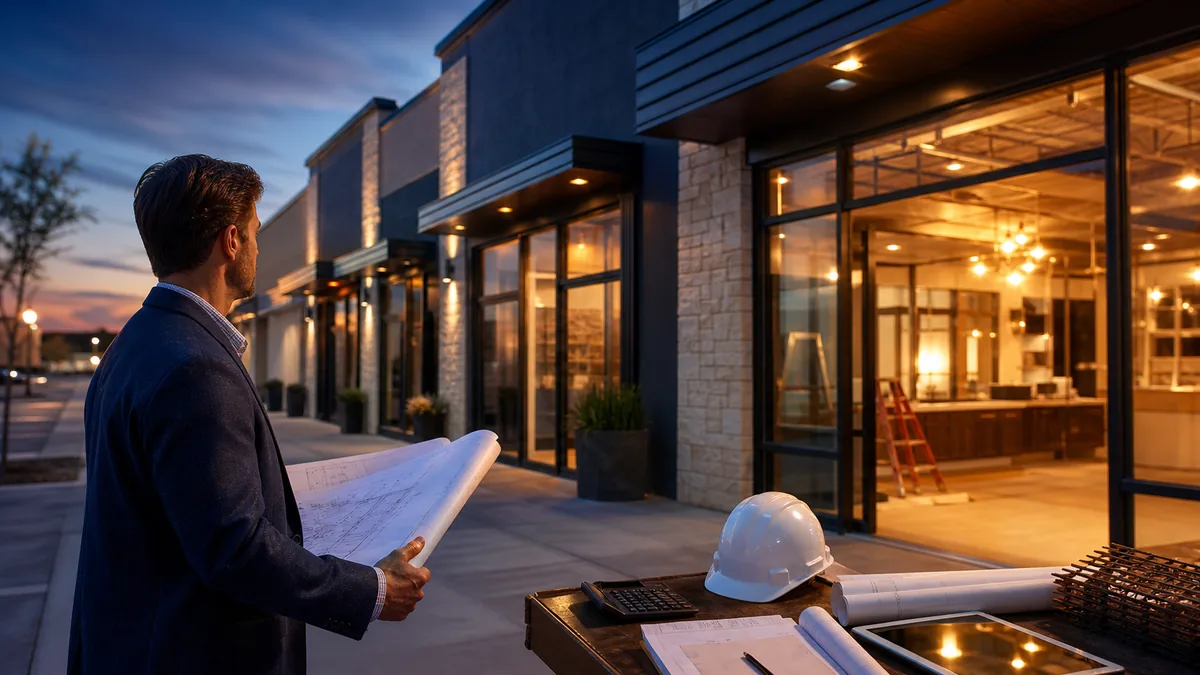
A franchise build-out is the construction and renovation work that turns a leased shell into a branded, code-compliant location — and most of its cost and legal obligations are fixed before you ever pick up a hammer. Two things drive the project: the franchisor’s design and construction standards (which you agreed to when you signed) and the local building, accessibility, and lien laws that apply to any commercial space. This checklist explains what you are paying for, where each obligation comes from, and how to keep a build-out from becoming the most expensive surprise of your first year.
What goes into a franchise build-out budget
A franchise build-out is rarely a single line item. It bundles construction, branded fixtures, equipment, professional fees, and government charges. The franchisor’s estimated initial investment in Item 7 of the Franchise Disclosure Document (FDD) must itemize these costs — under the FTC Franchise Rule (16 CFR 436.5(g)), the disclosure table has to list construction, remodeling, leasehold improvements, fixtures, and equipment, whether you buy or lease them. Read Item 7 as your starting budget, not your final one; it shows a range, and your actual site can land at the high end.
| Cost category | What it covers | Where it comes from |
|---|---|---|
| Leasehold improvements / construction | Walls, flooring, plumbing, electrical, HVAC, restrooms | FDD Item 7; lease work letter |
| Branded fixtures, signage, decor | Franchisor-spec millwork, exterior signage, finishes | FDD Item 7; franchise agreement |
| Equipment and technology | Production equipment, POS, security, networking | FDD Item 7 |
| Architecture and engineering | Stamped drawings, permit sets, code review | Professional fees |
| Permits and government fees | Building, electrical, plumbing, occupancy, impact fees | Local jurisdiction |
| Contingency | Change orders, overruns, schedule delays | Plan for it (commonly 10–15%) |
The contingency line is the one franchisees skip and regret. Build-outs generate change orders, and your franchise agreement usually still requires you to open by a fixed date regardless of construction delays.
The franchise agreement controls your build-out
Your franchise agreement — not your contractor — sets the rules for the space. Most agreements require the franchisor to approve your site, your plans, and sometimes your contractor before construction starts, and they obligate you to build to the brand’s current design specifications and signage standards. That means you generally cannot value-engineer the project the way an independent owner could; the prototype layout, the approved finishes, and the equipment list are contractual obligations.
Three clauses deserve close reading before you sign:
- Design and specification standards. Confirm whether you must use the franchisor’s current prototype and whether they can require mid-construction changes.
- Approved or required vendors. Some systems mandate specific suppliers or a turnkey contractor, which removes your ability to competitively bid the work.
- Opening deadline and default. Many agreements treat failure to open on time as a default. Match this deadline against a realistic permitting and construction timeline before you commit.
Because these obligations live in the FDD and the agreement, a pre-signing review is the cheapest place to catch them. For how this fits a full document review, see reviewing your FDD and the broader real costs of buying a franchise.
Permits, codes, and the certificate of occupancy
No commercial build-out opens legally without local sign-off. Expect to pull separate building, electrical, plumbing, and mechanical permits, each tied to stamped drawings, and to pass inspections at framing, rough-in, and final stages. The project ends with a certificate of occupancy (CO) — the municipality’s confirmation that the space may be occupied for its intended use. You cannot open to the public without it, and a delayed CO is a common reason franchisees miss a contractual opening date.
Permitting timelines vary widely by jurisdiction, so build the local plan-review queue into your schedule rather than assuming construction time alone.
ADA accessibility is not optional
A franchise location is almost always a “place of public accommodation,” so it falls under Title III of the Americans with Disabilities Act and the 2010 ADA Standards for Accessible Design. The rule depends on what you are doing:
- New construction. A newly built space must comply fully with the 2010 Standards — accessible entrances, routes, restrooms, parking, and counters.
- Alterations. When you alter an area containing a primary function, you must also make the path of travel to that area accessible (including the route, restrooms, and drinking fountains serving it). Under 28 CFR 36.403, that path-of-travel obligation is capped at 20% of the cost of the overall alteration — you spend up to that 20% even if it does not produce a fully accessible path.
ADA compliance is a shared landlord-and-tenant problem, but enforcement and lawsuits typically reach the business operating the space. Build accessibility into the drawings from the start; retrofitting after a CO is far more expensive.
Protect yourself from contractor and lien risk
The biggest legal exposure in a build-out is not the franchisor — it is unpaid trades. In Texas, the mechanic’s and materialman’s lien statute (Property Code Chapter 53, overhauled by House Bill 2237 effective January 1, 2022) lets contractors, subcontractors, and suppliers place a lien tied to the project even on work you thought you paid for, if money did not flow down the chain. A lien can cloud your leasehold and trigger a default under your lease.
Three habits reduce that risk:
- Get lien waivers with every payment, conditional on the check clearing, from the general contractor and key subcontractors.
- Use the statutory forms and deadlines under Chapter 53; the 2022 amendments standardized the notice forms and moved most deadlines to the 15th of the month, extended to the next business day when that date falls on a weekend or holiday.
- Clarify the work letter. If the landlord is delivering improvements or paying a tenant improvement (TI) allowance, the lease’s work letter should spell out who contracts the work, who pays, and who carries the lien risk.
Because this sits at the intersection of franchise and Texas commercial law, see our Texas Business Law and Franchise Law overviews, plus the related notes on the franchise lease addendum and leasehold improvements.
A franchise build-out checklist
Work this list in order, and keep documentation for each item:
- Confirm Item 7 against your real site. Compare the FDD’s estimated construction and leasehold-improvement ranges to a contractor’s bid for your specific space.
- Lock the franchisor approvals. Get written sign-off on site, prototype, plans, signage, and vendors before construction.
- Reconcile the opening deadline in your agreement with a realistic permit-plus-construction schedule.
- Negotiate the lease work letter and TI allowance, and assign lien responsibility in writing.
- Engage a licensed commercial architect/engineer for stamped, code-compliant, ADA-compliant drawings.
- Pull all permits and schedule inspections; track the certificate-of-occupancy path.
- Bid the work where the agreement allows, and vet contractors’ insurance and references.
- Require lien waivers at every draw; verify subcontractors and suppliers are paid.
- Carry a 10–15% contingency for change orders and delays.
- Plan final inspections, the CO, and the grand opening with buffer before your contractual open date.
Frequently asked questions
Are build-out costs included in the FDD? Yes. Item 7 must disclose estimated construction, remodeling, leasehold-improvement, fixture, and equipment costs in a table, shown as a range. Treat it as a budget baseline and confirm it against a bid for your actual location.
Can I use my own contractor and design? Usually only within limits. Most franchise agreements require you to build to the brand’s prototype and signage standards, and some require approved vendors or a turnkey builder. Read the design and vendor clauses before you sign.
Do I really have to meet ADA standards in a small space? Almost certainly. A franchise open to the public is a place of public accommodation. New construction must fully meet the 2010 ADA Standards; alterations trigger a path-of-travel obligation capped at 20% of the alteration’s cost.
How do I avoid getting stuck with a contractor’s lien in Texas? Collect conditional lien waivers with each payment, follow Chapter 53’s notice and deadline rules, and make sure money actually reaches subcontractors and suppliers. Address lien responsibility in the lease work letter too.
Considering a franchise purchase? Reidel Law Firm reviews Franchise Disclosure Documents on a flat fee, including the Item 7 build-out estimates and the construction obligations buried in the franchise agreement — with a plain-English summary and direct attorney access. Get a flat-fee FDD review →