INTERNATIONAL TRADE LAW
Forced Labor Import Bans: A Compliance Guide
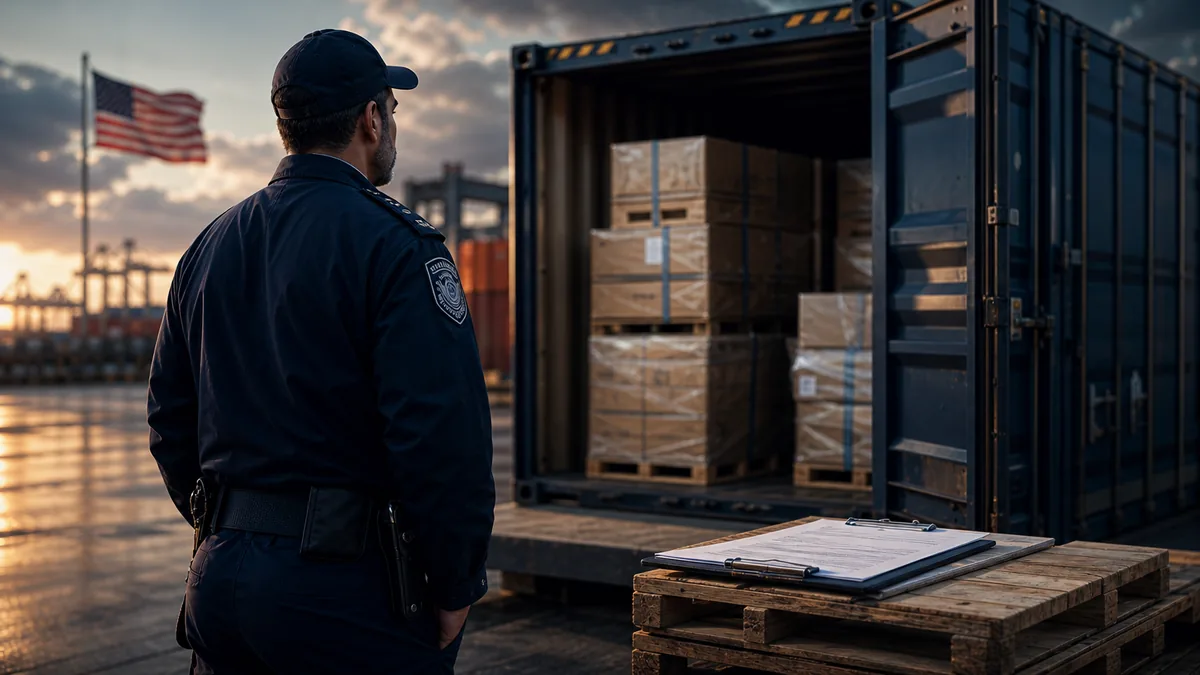
U.S. law prohibits importing any product made, wholly or in part, with forced labor — and the importer bears the burden of proving its goods are clean. The rule is not new, but enforcement has changed dramatically: CBP now detains shipments on supply-chain risk alone, and for goods linked to China’s Xinjiang region the law presumes forced labor unless the importer rebuts it with strong evidence. Avoiding a forced-labor hold is now a supply-chain due-diligence problem, not just a paperwork one.
The Core Prohibition: Section 1307
The foundation is Section 307 of the Tariff Act of 1930, codified at 19 U.S.C. § 1307. It bars the importation of any merchandise mined, produced, or manufactured wholly or in part by convict labor, forced labor, or indentured labor. The “in part” language is critical: a single tainted input deep in the supply chain can taint the finished good.
For decades the statute had a loophole — the “consumptive demand” exception, which allowed forced-labor goods in if U.S. demand exceeded domestic supply. Congress closed that exception in the Trade Facilitation and Trade Enforcement Act of 2015 (effective 2016). Since then, Section 1307 has had real teeth, and CBP has used them with increasing frequency.
How CBP Enforces It: WROs and Findings
CBP enforces Section 1307 mainly through two tools:
- Withhold Release Orders (WROs). When CBP has information reasonably indicating that merchandise was made with forced labor, it can issue a WRO directing officers to detain that merchandise at the ports. A WRO is not a final determination; the importer can export the goods or submit evidence that they are not the product of forced labor.
- Findings. If CBP determines, on a more developed record, that the goods are in fact made with forced labor, it publishes a formal Finding, after which the goods may be seized and forfeited.
WROs can target a specific producer, a commodity from a region, or an entire supply chain. Once one is in place, the detained importer must affirmatively prove admissibility — CBP does not have to prove the violation to hold the goods.
The UFLPA Rebuttable Presumption
The most significant development is the Uyghur Forced Labor Prevention Act (UFLPA), enacted December 23, 2021, with its central provision effective June 21, 2022. The UFLPA creates a rebuttable presumption that any goods mined, produced, or manufactured wholly or in part in the Xinjiang Uyghur Autonomous Region (XUAR) of China — or by an entity on the UFLPA Entity List — were made with forced labor and are therefore barred under Section 1307.
The presumption flips the usual burden onto the importer. To overcome it, an importer must:
- Demonstrate full compliance with the due-diligence guidance and the enforcement Strategy issued by the Forced Labor Enforcement Task Force (FLETF);
- Respond completely and substantively to all CBP requests for information; and
- Show by clear and convincing evidence that the goods were not made wholly or in part by forced labor.
“Clear and convincing evidence” is a demanding standard, and it requires detailed, document-level supply-chain tracing — not a supplier’s assurance letter. The UFLPA Entity List and the FLETF Strategy are updated over time, and the list of high-priority enforcement sectors (which has included cotton and apparel, polysilicon and solar products, and tomatoes, among others added in periodic updates) continues to expand. Importers should check the current FLETF guidance before relying on any specific scope.
Building a Forced-Labor Compliance Program
Because the burden sits with the importer, the work happens before goods ship. A defensible program generally includes:
| Element | What it involves |
|---|---|
| Supply-chain mapping | Tracing the chain beyond the direct supplier to raw materials and the entities at each tier |
| Risk assessment | Flagging high-risk regions, commodities, and inputs (e.g., cotton, polysilicon, certain minerals) |
| Supplier due diligence | Codes of conduct, audits, and contractual rights to trace and verify |
| Documentary tracing | Keeping records that can prove origin to the raw-material level on demand |
| Remediation | A process to investigate and act when red flags appear |
This is the same documentary discipline that supports import compliance generally — applied to labor conditions rather than classification or value. For goods with any nexus to high-risk regions, the tracing has to reach further down the chain than most companies are used to.
What Happens When a Shipment Is Detained
A UFLPA or WRO detention puts the importer on a clock and a choice. The company can export the goods, or it can contest the detention by submitting evidence. Contesting a UFLPA detention means assembling the clear-and-convincing supply-chain package described above, often within tight deadlines. There is no duty payment that cures a forced-labor problem — admissibility turns entirely on proof of how and where the goods were made.
Frequently Asked Questions
Does the ban apply only to goods from China? No. Section 1307 applies worldwide to any goods made with forced labor. The UFLPA adds a specific, harder-to-rebut presumption for goods connected to Xinjiang or to listed entities, but WROs have targeted producers in many countries.
What does “produced in part” mean? That forced labor anywhere in the supply chain — including a raw material or component — can bar the finished product, even if final assembly was elsewhere.
Who has the burden of proof? The importer. Under a WRO the importer must show the goods are admissible; under the UFLPA the importer must rebut the presumption by clear and convincing evidence.
Can I just pay a duty or penalty and bring the goods in? No. Forced-labor admissibility is not a duty question. If you cannot prove the goods are clean, they are excluded, and they may be seized and forfeited.
Concerned about forced-labor exposure in your supply chain? Reidel Law Firm prepares flat-fee import/export compliance memos and advises importers on Section 1307 and UFLPA compliance with direct attorney access. Get an import compliance memo →