
INTERNATIONAL TRADE LAW
How to Import Food Products into the U.S.
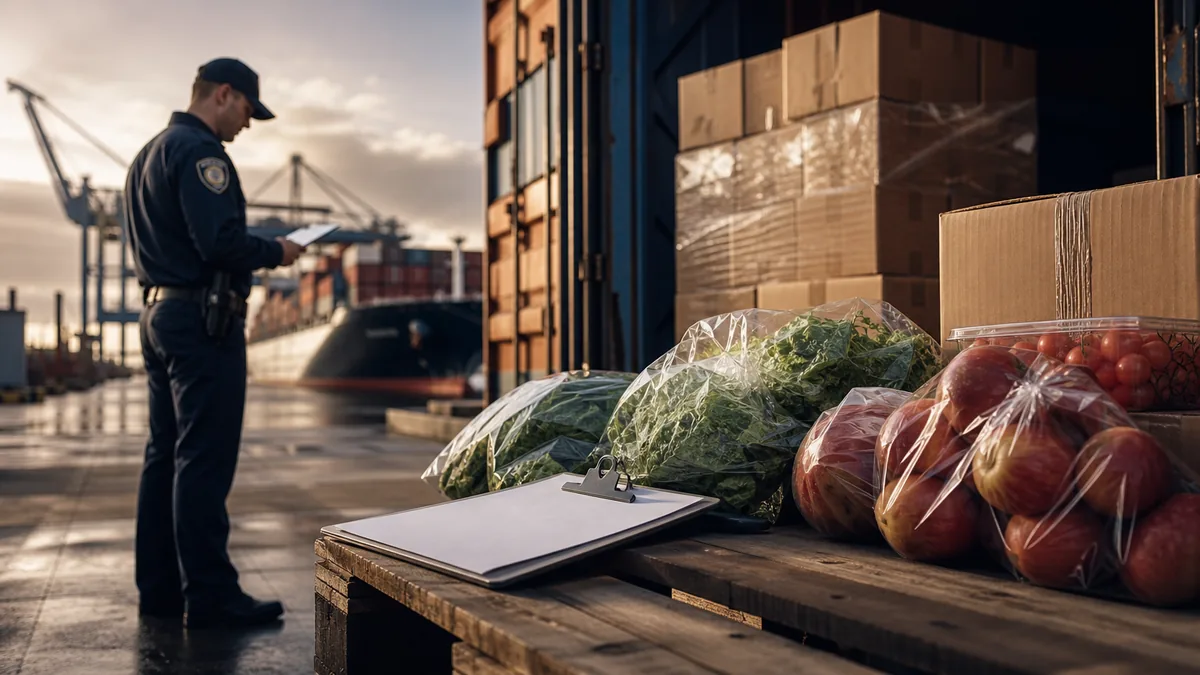
Importing food into the United States means the foreign facility must be registered with the FDA, the importer must file Prior Notice before the shipment arrives, and the importer must run a Foreign Supplier Verification Program for each food and each supplier. These obligations come from the Bioterrorism Act and the FDA Food Safety Modernization Act (FSMA), and FDA can detain or refuse food that does not meet them. Meat, poultry, and processed egg products follow a separate USDA regime, not these FDA rules.
Three Core FDA Requirements
For most FDA-regulated food and animal feed, three requirements drive the import. Treat them as a checklist for every shipment.
| Requirement | Who acts | When |
|---|---|---|
| Facility registration | Foreign facility (with U.S. Agent) | Before shipping; renew biennially |
| Prior Notice | Importer or agent | Before the food arrives at the port |
| FSVP | U.S. importer of record | In place before and during importing |
Each one is independently enforceable. A registered facility with no Prior Notice still gets held at the border; a Prior Notice with no FSVP behind it leaves the importer exposed to an FDA inspection finding.
Facility Registration
Any foreign facility that manufactures, processes, packs, or holds food for U.S. consumption must register with FDA and designate a U.S. Agent. Registrations must be renewed every even-numbered year during the window that runs from October 1 to December 31; a registration not renewed by the December 31 deadline expires. There is no fee to register or renew. If the supplier’s facility is not registered — or lets its registration lapse — its food is not legally importable, so confirm active registration as part of onboarding a new supplier.
Prior Notice
Under the Public Health Security and Bioterrorism Preparedness and Response Act of 2002, FDA must receive Prior Notice for essentially all imported food and animal feed before it arrives. Prior Notice is an electronic submission, filed through FDA’s system or with the customs entry, that gives FDA shipment details — product, manufacturer, shipper, and arrival information — in advance. Filing late or with the wrong facility information is a common reason food is held at the port, so build the Prior Notice into the broker’s entry routine.
Foreign Supplier Verification Program (FSVP)
FSMA requires the U.S. importer to develop and follow a Foreign Supplier Verification Program for each food it imports and each foreign supplier of that food. In practice, FSVP means the importer verifies that its supplier produces the food under controls that provide the same level of public-health protection as FDA’s preventive-controls and produce-safety rules, and that the food is not adulterated and is properly labeled for allergens. The FSVP importer named in the entry must be a U.S. person with a recognized identifier (a DUNS number). FDA inspects FSVP records directly — often without ever touching the food — so the program has to be documented, not just intended.
Where Other Agencies Take Over
Not all “food” is FDA’s. Meat, poultry, and processed egg products are regulated by USDA’s Food Safety and Inspection Service, which generally requires that the product come from a country and establishment FDA’s counterpart has certified as having an equivalent inspection system. Alcohol involves the Alcohol and Tobacco Tax and Trade Bureau. And every food import still needs a correct tariff classification for customs — see how to classify imported goods. Importing other FDA-regulated products, like medical devices, follows a different FDA pathway.
Frequently Asked Questions
Does my foreign supplier really have to register with FDA? Yes. A foreign facility that manufactures, processes, packs, or holds food for the U.S. market must register and renew that registration every even-numbered year between October 1 and December 31. Lapsed registration blocks import.
What is Prior Notice and who files it? Prior Notice is an advance electronic notice to FDA, required for nearly all imported food, giving shipment details before arrival. The importer or its agent files it, typically with the customs entry.
Is FSVP the same as facility registration? No. Facility registration is the supplier’s obligation; FSVP is the U.S. importer’s program to verify each supplier and each food. Both are required, and FDA can inspect FSVP records on their own.
Do these FDA rules cover meat and poultry? No. Meat, poultry, and processed egg products fall under USDA’s Food Safety and Inspection Service, which uses an equivalence system rather than the FDA registration/Prior Notice/FSVP framework.
Importing food or beverages? Reidel Law Firm prepares flat-fee import/export compliance memos and advises importers on FDA requirements and customs compliance with direct attorney access. Get an import compliance memo →


