INTERNATIONAL TRADE LAW
How to Export Cars from the US: CBP Rules & Steps
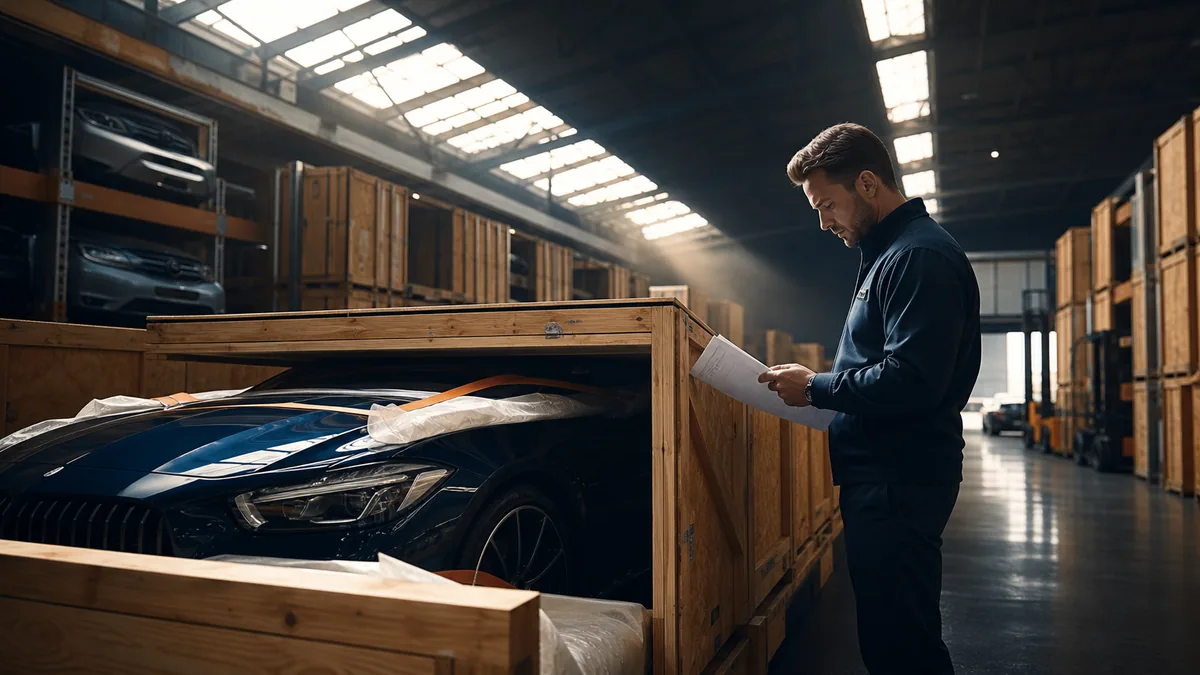
Exporting a car from the United States takes two government filings and one in-person step: you must file Electronic Export Information (EEI) in the Automated Export System (AES), and you must present the vehicle and its original certificate of title to CBP at the port of export at least 72 hours before the vehicle ships. Both requirements apply to every used self-propelled vehicle — regardless of the car’s value, condition, or destination, Canada included. Miss the 72-hour window or show up without the right title documents, and the car sits at the port while your vessel sails.
This guide walks through the CBP rules under 19 CFR Part 192, the AES filing, lien and title issues, the export-control checks that now matter for vehicles, and the pitfalls that strand cars at the dock. (Bringing a vehicle the other direction? See our companion guide on how to import a car to the United States.)
What CBP Requires Before a Vehicle Leaves the US
CBP’s used-vehicle export rules live in 19 CFR Part 192, and they exist mainly to combat stolen-vehicle exports — which is why the agency wants the car and its ownership paperwork in front of an officer before departure. “Used” is defined broadly: any self-propelled vehicle whose equitable or legal title has ever been transferred to an ultimate purchaser. A one-month-old car bought from a dealer is “used” for export purposes.
For a U.S.-titled vehicle, you must present the original certificate of title (or a certified copy from the issuing authority) plus two complete copies. CBP verifies authenticity, marks the documents, and in most cases returns the original to you. Each port director sets the location, hours, and procedure for vehicle exports at that port — and ports genuinely differ on logistics, so call ahead.
Step-by-Step: How to Export a Car
Step 1: Confirm ownership and clear the title
The title is the whole ballgame. If the vehicle is financed or leased, CBP will not let it leave on your say-so: you need the lienholder’s written authorization to export — on the lienholder’s letterhead, with an original signature, identifying the vehicle and confirming the lien status — or a lien release after payoff. If the vehicle was never titled (some states don’t title certain vehicles), expect to present the bill of sale plus a statement of ownership instead. Resolve all of this before booking freight; lien payoffs routinely take longer than shipping schedules allow.
Step 2: File EEI in AES and get your ITN
EEI filing through AES (inside CBP’s ACE portal) is mandatory for all used self-propelled vehicles under the Foreign Trade Regulations (15 CFR Part 30) — there is no low-value exemption, and the usual Canada exemption does not apply to used vehicles. The filing must be made, and the Internal Transaction Number (ITN) it generates provided to CBP, at least 72 hours before export. The filing includes the VIN. The U.S. Principal Party in Interest files, or an authorized agent files on its behalf; a foreign seller must use a U.S. authorized agent.
Step 3: Submit documents to CBP at the export port 72 hours ahead
Deliver the title package and ITN to the port of export at least 72 hours before the vehicle ships. For exports by vessel or aircraft, the vehicle and documents generally must be presented to CBP at least 72 hours before lading. For land-border exports to Canada or Mexico, the documents go to CBP at least 72 hours in advance and the vehicle is presented at the time it crosses. Confirm the port’s preferred submission method — some take email, others want documents in hand.
Step 4: Present the vehicle to CBP for inspection
CBP physically verifies the VIN against the title and the AES filing. Make the car available where and when the port directs. A VIN that doesn’t match the paperwork — a typo in the AES filing is the classic cause — stops the export cold.
Step 5: Screen the buyer and destination for export-control problems
Cars are not license-free goods anymore. Screen every buyer, freight forwarder, and consignee against the Consolidated Screening List (which rolls up the Commerce, State, and Treasury restricted-party lists) before you commit. Exports of vehicles to embargoed destinations — Iran, North Korea, Cuba, Syria — are prohibited or heavily restricted. And as of mid-2026, BIS still requires a license, reviewed under a policy of denial, to export “luxury goods” — a category that expressly includes vehicles — to Russia or Belarus. U.S. and European authorities have prosecuted exporters who routed cars to Russia through third countries, so treat a buyer in a known transshipment hub asking about a Russia-bound car as a walk-away red flag.
Step 6: Arrange shipping and confirm destination-country import rules
Choose roll-on/roll-off service (cheapest, car is driven aboard) or containerized shipping (more protection, allows goods inside the container). Before anything ships, confirm the destination country’s import rules: many countries cap vehicle age, ban left- or right-hand-drive configurations, impose emissions standards, or charge import duties that exceed the car’s value. The buyer typically handles import clearance, but an unsellable car at a foreign port becomes the exporter’s problem fast.
Requirements and Timeline at a Glance
| Requirement | Legal basis | Deadline |
|---|---|---|
| EEI filed in AES; ITN issued (all used self-propelled vehicles, any value or destination) | 15 CFR Part 30 (FTR) | At least 72 hours before export |
| Original title (or certified copy) + two complete copies to CBP at port | 19 CFR Part 192 | At least 72 hours before export |
| Lienholder authorization or lien release (financed/leased vehicles) | 19 CFR Part 192 | With the title package |
| Vehicle presented for CBP inspection | 19 CFR Part 192 | 72 hours before lading (vessel/air); at crossing (land) |
| Denied-party and sanctioned-destination screening | EAR / OFAC sanctions | Before committing to the sale |
Common Pitfalls
The same handful of mistakes account for most stranded vehicles:
- Counting the 72 hours from the wrong event. The clock runs to export/lading, not to when you’d like to drop the car off. Build in buffer; ports are not open around the clock.
- Unresolved liens. A payoff in process is not a release in hand. CBP needs the lienholder’s paper.
- Assuming every port works the same. Document submission methods, inspection locations, and hours vary by port. Call the port’s vehicle export office first.
- VIN or ITN mismatches. The AES filing, title, and physical VIN must agree exactly.
- Skipping screening because “it’s just a car.” Vehicle exports to Russia are an active enforcement priority, and penalties under export-control law reach into criminal territory.
Frequently Asked Questions
Do I need to file in AES to export a car?
Yes. EEI filing in AES is required for every used self-propelled vehicle regardless of value or destination — including exports to Canada, which are otherwise generally exempt. The ITN must reach CBP at least 72 hours before export.
Can I export a car that still has a loan on it?
Only with the lienholder’s written authorization on its letterhead, or after paying off the loan and obtaining a lien release. Without one or the other, CBP will not clear the vehicle for export.
Can I export a car to Russia?
As a practical matter, no. Vehicles fall under the BIS luxury-goods restrictions for Russia and Belarus, which require a license that is reviewed under a policy of denial. Routing through a third country does not cure the violation — it is the evasion pattern enforcement agencies target.
What happens if I miss the 72-hour window?
The vehicle does not ship. CBP requires the full notice period for document verification and inspection, so a late filing means rebooking freight and restarting the clock — and attempting to export without complying can lead to seizure of the vehicle and penalties.
Exporting vehicles at any volume means getting title procedure, AES filings, and sanctions screening right every single time. Reidel Law Firm advises dealers and exporters on vehicle export compliance, and our flat-fee import/export compliance memo gives you a written, current playbook for your exact routes and buyers. Get a flat-fee compliance memo before your next shipment books.