INTERNATIONAL TRADE LAW
How to Export Live Animals from the U.S.
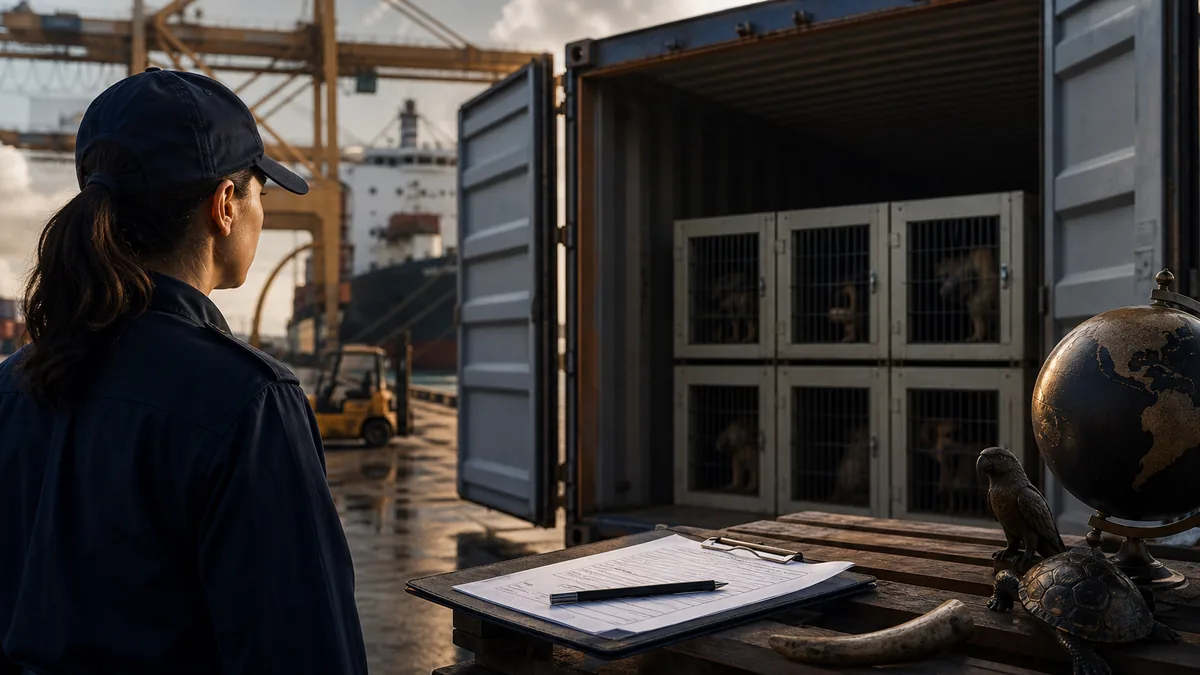
Exporting live animals from the United States means satisfying three layers of rules at the same time: U.S. export requirements, the destination country’s import requirements, and animal-welfare and wildlife-protection law. No single agency runs the whole process, which is why live-animal exports stall — a shipment can clear U.S. paperwork and still be turned away abroad for a missing destination permit, or vice versa. Map all three layers before you book transport.
Who Regulates a Live-Animal Export
The agency that controls your shipment depends on the species:
| Agency | Role | When it applies |
|---|---|---|
| USDA APHIS (Veterinary Services) | Issues U.S. export health certificates | Most livestock, pets, and other animals |
| U.S. Fish & Wildlife Service (USFWS) | Issues export/CITES permits for protected wildlife | CITES-listed and ESA-listed species |
| Destination country authority | Issues the import permit and sets conditions | Always — every export needs an import path |
| BIS / Census (EAR, AES) | Export filing and any control screening | The general export-filing layer |
Most countries will not admit an animal without a zoosanitary (animal health) certificate issued by USDA, often endorsed by an APHIS-accredited veterinarian. That certificate confirms the animal meets the destination’s disease, testing, and vaccination requirements — which are set by the receiving country, not the U.S.
Start With the Destination’s Import Rules
The destination country dictates most of what you must do. Its import permit will specify required tests, vaccinations, quarantine periods, microchipping, and the exact form of health certificate it will accept. Because those conditions drive the U.S.-side certificate and the testing timeline (some tests must be done within set windows before departure), confirm the destination requirements first and work backward. APHIS publishes destination-by-destination export requirements to help line this up.
Protected Wildlife: USFWS and CITES
If the animal is a protected species, a second regime applies. The U.S. Fish & Wildlife Service issues export permits for wildlife protected under the Endangered Species Act and the Convention on International Trade in Endangered Species (CITES). CITES-listed species generally need a CITES export permit, and the importing country may require a matching CITES import permit. Wildlife shipments also typically must move through a designated port and may require advance declaration to USFWS. Do not assume a “common” exotic pet is unregulated — many are CITES-listed.
Animal Welfare and Transport
Beyond health and wildlife rules, transport conditions are regulated. The Animal Welfare Act governs the humane handling of many animals, and air shipments must meet the carrier’s live-animal acceptance standards (carriers generally follow the IATA Live Animals Regulations for container, spacing, and labeling requirements). Build the welfare requirements into the plan early; they affect crate sourcing, routing, and timing.
A Sequenced Checklist
- Identify the species precisely and check whether it is CITES- or ESA-listed.
- Get the destination import permit and conditions — tests, vaccines, quarantine, certificate format.
- Schedule an APHIS-accredited veterinarian for required testing and the health certificate within the destination’s time window.
- Obtain USFWS/CITES permits if the species is protected.
- Arrange compliant transport (welfare standards, IATA container rules, designated port for wildlife).
- Handle the export filing (AES/EEI) and keep the full record set.
Frequently Asked Questions
What document do most countries require to import a U.S. animal?
A USDA-issued export health (zoosanitary) certificate, usually completed by an APHIS-accredited veterinarian and reflecting the destination country’s specific disease and testing requirements.
Do I need a CITES permit to export my exotic pet?
If the species is listed under CITES or the Endangered Species Act, yes — the U.S. Fish & Wildlife Service issues the export permit, and the destination may require a CITES import permit as well. Confirm the listing status before you plan the move.
Which rules come first, the U.S. ones or the destination’s?
Start with the destination’s import requirements. They drive which U.S. certificate, tests, and timing you need, so working backward from them prevents wasted testing and rejected shipments.
Is this just paperwork, or are there welfare rules too?
Both. The Animal Welfare Act and carrier live-animal standards (commonly the IATA Live Animals Regulations) govern humane transport, and they affect crating, routing, and scheduling.
Live-animal exports fail on the seam between three rulebooks. Reidel Law Firm helps exporters map the U.S. export, destination-import, and wildlife requirements and coordinate the specialists each one needs, on flat-fee terms. Get an export compliance memo.