INTERNATIONAL TRADE LAW
Exporting From a Customs Bonded Warehouse
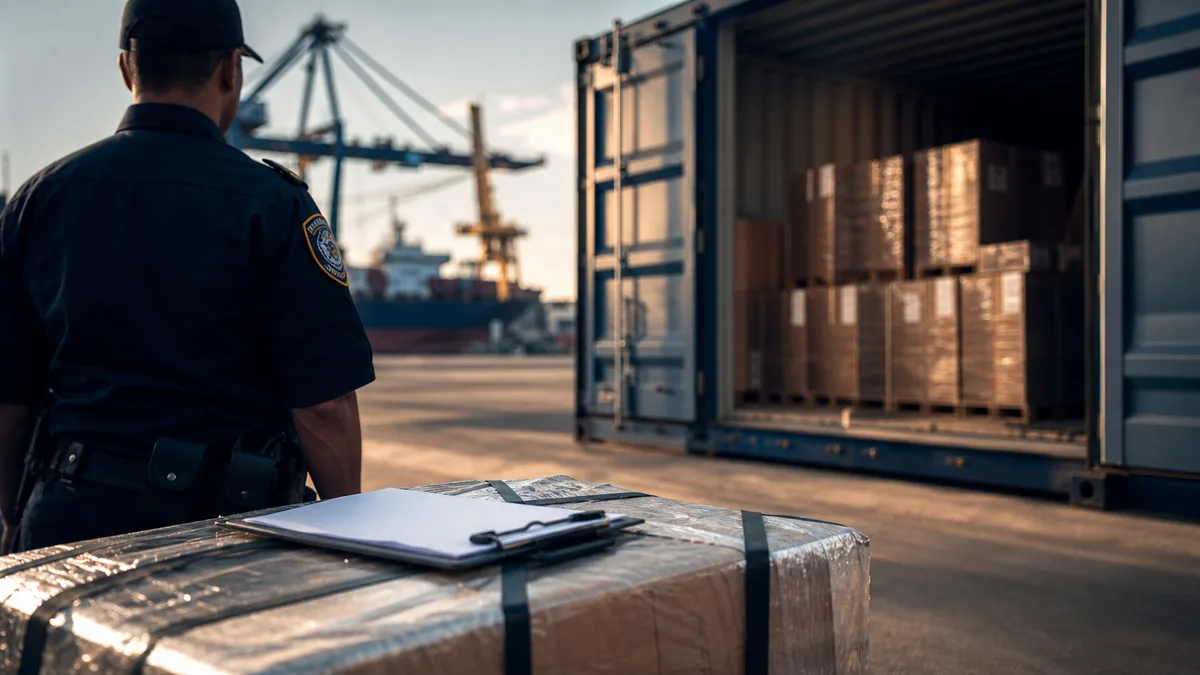
A customs bonded warehouse lets you store imported goods under CBP supervision without paying import duty until you withdraw them — and if you re-export them straight from the warehouse, you generally never pay U.S. duty at all. For a company that imports to re-export, or that wants to defer duty while it finds a buyer, this is one of the most useful tools in U.S. customs law. The rules are set by statute and 19 CFR Part 19, and the headline limit is five years.
This guide explains how bonded warehousing works for exporters, what the limits are, and how it compares with duty drawback.
How Duty Deferral Works
When dutiable merchandise enters a bonded warehouse, the duty is not due on entry. It becomes due only when the goods are withdrawn for consumption into U.S. commerce. That creates three outcomes for an exporter:
- Withdraw for export — re-export the goods directly from the warehouse and no U.S. import duty is owed, because they never entered U.S. commerce.
- Withdraw for consumption — pay duty at the rate in effect on the date of withdrawal, not the date of import.
- Leave them in storage — defer the duty in the meantime, freeing up working capital.
CBP controls the warehouse jointly with the operator, and the goods stay under bond the entire time.
The Five-Year Limit
Merchandise may remain in a bonded warehouse for up to five years from the date of importation (19 U.S.C. § 1557). Goods on which duty is still unpaid after five years are treated as abandoned to the government and sold (19 U.S.C. § 1559). Plan your withdrawal, export, or duty payment well inside that window.
The Classes of Bonded Warehouse
Bonded warehouses are not all the same; 19 CFR Part 19 defines several classes. The ones exporters meet most often:
| Class | What it is |
|---|---|
| Class 2 | Importer’s private bonded warehouse — stores only that importer’s goods |
| Class 3 | Public bonded warehouse — stores goods for the general public |
| Class 4 | Bonded yard or shed for heavy or bulky merchandise |
| Class 6 | Manufacturing warehouse — goods manufactured under bond for export |
| Class 9 | Duty-free store (for export to travelers leaving the U.S.) |
Class 6 is worth knowing: you can manufacture or manipulate goods under bond and export the finished product without paying duty on the imported inputs.
Bonded Warehouse vs. Duty Drawback
Both tools spare you duty on goods that ultimately leave the country, but they work at opposite ends of the timeline:
| Bonded warehouse | Duty drawback | |
|---|---|---|
| When duty is handled | Deferred — never paid if re-exported | Paid at import, then refunded after export |
| Cash flow | No duty outlay up front | Duty paid first, refund later |
| Mechanism | Storage under bond, CBP-supervised | Claim under 19 U.S.C. § 1313 |
| Typical refund/saving | Full duty avoided on export | Up to 99% of duties, taxes, and fees |
If you know at import that the goods are bound for re-export, the warehouse avoids the outlay entirely. If duty has already been paid on imported inputs you later export, duty drawback can recover up to 99% of it, with a five-year window to file.
A Note on “Export Warehouses” for Tobacco
The phrase “export warehouse” also has a narrower meaning: a TTB-permitted export warehouse for tobacco products, governed by the Alcohol and Tobacco Tax and Trade Bureau, where federal excise tax is suspended until the product is exported. That is a separate regime from the CBP customs bonded warehouse described above. If you handle tobacco, confirm which permit you actually need — the two are easy to conflate and regulated by different agencies.
Frequently Asked Questions
How long can goods stay in a customs bonded warehouse?
Up to five years from the date of importation. After five years with duty unpaid, the goods are deemed abandoned to the government and sold under 19 U.S.C. § 1559.
Do I pay duty if I export goods from a bonded warehouse?
No. Goods withdrawn from a bonded warehouse for export are not entered into U.S. commerce, so no U.S. import duty is owed on them. Duty applies only if you withdraw the goods for domestic consumption.
What is the difference between a bonded warehouse and duty drawback?
A bonded warehouse defers duty so you never pay it on re-exported goods. Drawback refunds up to 99% of duty you already paid at import after the goods are exported or destroyed. One avoids the outlay; the other recovers it.
Who regulates customs bonded warehouses?
U.S. Customs and Border Protection, under 19 U.S.C. § 1555–1559 and 19 CFR Part 19. Tobacco “export warehouses” are a separate category permitted by the Alcohol and Tobacco Tax and Trade Bureau.
Used correctly, a bonded warehouse turns duty into a planning decision instead of a sunk cost. Reidel Law Firm advises importers and exporters on bonded-warehouse withdrawals, drawback, and duty strategy on flat-fee terms. Get an export compliance memo.