FRANCHISE LAW
Sbarro's Decline: Lessons From Mall Franchising
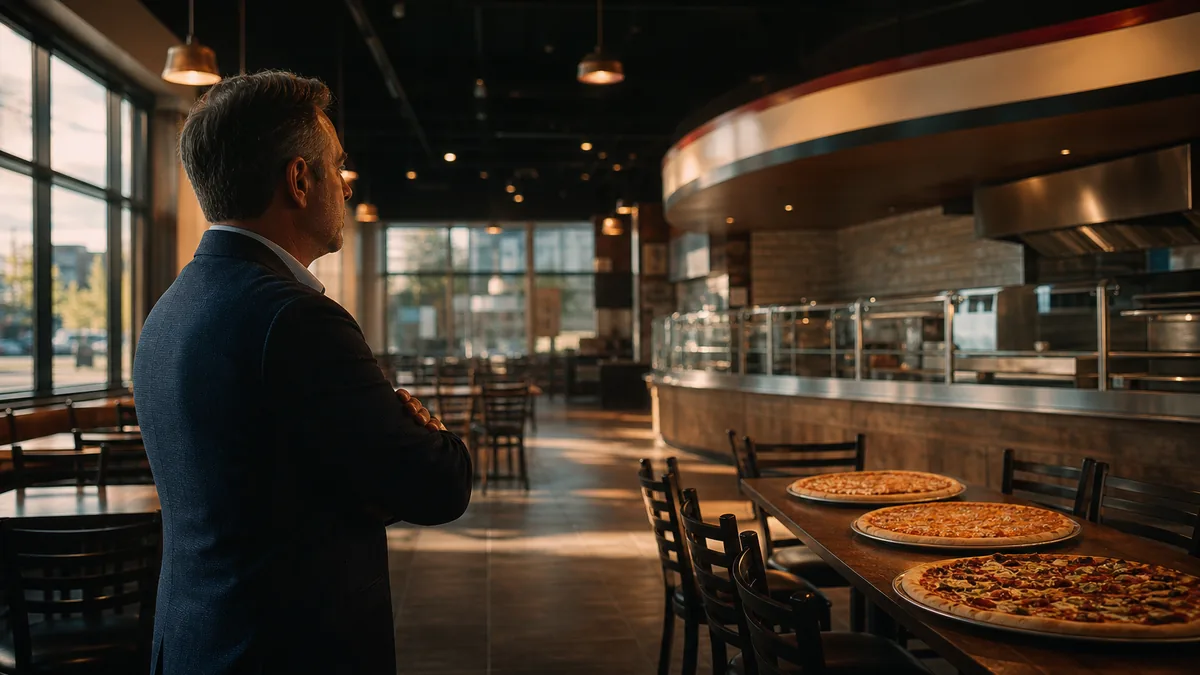
Sbarro’s two bankruptcies are a textbook lesson in channel concentration risk — the danger of building a franchise on a single location type whose fortunes you can’t control. Founded as a family Italian deli in Brooklyn in 1956, Sbarro grew into a mall-food-court empire after opening its first mall location in 1970. That mall focus powered its rise — and then drove its fall, as declining mall traffic helped push the chain into Chapter 11 in 2011 and again in 2014. For a prospective franchisee, the takeaway isn’t “avoid pizza” — it’s “understand what your system depends on.” This article draws out the legal-diligence lesson.
What Happened
Sbarro tied its growth almost entirely to shopping-mall food courts. When the Great Recession hit and American mall culture began its long decline, the model lost the foot traffic it was built on. The company filed for Chapter 11 bankruptcy in 2011, restructured, and then filed again in March 2014 — having closed roughly 182 North American locations just weeks earlier, close to half its U.S. footprint. Across both bankruptcies, more than 400 North American locations closed. The brand survived (it still operates and has diversified beyond malls), but franchisees who bought into the mall-dependent model lived through the disruption.
The Legal-Diligence Lesson: Concentration Risk
Sbarro’s story is about a risk you can actually evaluate before signing. A franchise concentrated in one channel — a specific venue, a single supplier, one product trend — inherits that channel’s trajectory. The diligence questions that matter:
- What does this system depend on? If it’s foot traffic in one venue type, research that venue’s trajectory, not just the brand’s marketing.
- What does Item 20 show? Outlet counts, openings, and especially closures and transfers reveal whether the system is growing or contracting before the news does. A wave of closures is a flashing signal.
- What does Item 21 show? The franchisor’s financial statements tell you whether it can weather a downturn in its core channel.
None of this requires predicting the future — it requires reading the disclosures and asking what happens to your unit if the channel weakens.
What a Buyer Should Take Away
Channel concentration isn’t automatically disqualifying; plenty of successful franchises are venue-specific. The point is to price the risk in — to know you’re betting partly on the health of malls (or whatever the channel is), and to confirm the franchisor is strong enough, and the unit economics good enough, to justify that bet. The franchisees who struggled weren’t unlucky so much as under-informed about a risk the documents could have surfaced. Read the FDD’s outlet and financial disclosures with channel risk specifically in mind, and see the broader pattern in our legal lessons from franchise failures.
Frequently Asked Questions
Why did Sbarro go bankrupt?
Sbarro’s growth was concentrated in shopping-mall food courts. As mall traffic declined — accelerated by the Great Recession — the model lost the foot traffic it depended on, contributing to Chapter 11 bankruptcies in 2011 and again in 2014, alongside heavy debt.
What is channel concentration risk in franchising?
It’s the risk that a franchise depending on a single location type, supplier, or sales channel will rise and fall with that channel. If the channel weakens — as mall foot traffic did for Sbarro — every franchisee tied to it is exposed, regardless of how well they operate.
How can I tell if a franchise is too dependent on one channel?
Ask what the system fundamentally relies on, then check the FDD: Item 20’s outlet and closure data shows whether the system is contracting, and Item 21’s financials show whether the franchisor can survive a downturn. Interviewing current and former franchisees adds the on-the-ground picture.
Is buying a mall-based franchise a bad idea?
Not necessarily — but you should price the channel risk in. Understand that you’re partly betting on that venue’s health, confirm the unit economics justify it, and verify the franchisor is financially strong enough to adapt, as Sbarro eventually did by diversifying beyond malls.
The risks that sank specific franchises are usually visible in the disclosures beforehand. Reidel Law Firm reviews FDDs on a flat fee with exactly these structural risks in mind. Get a flat-fee FDD review before you commit.