FRANCHISE LAW
The Decline of Blockbuster: A Franchise Failure
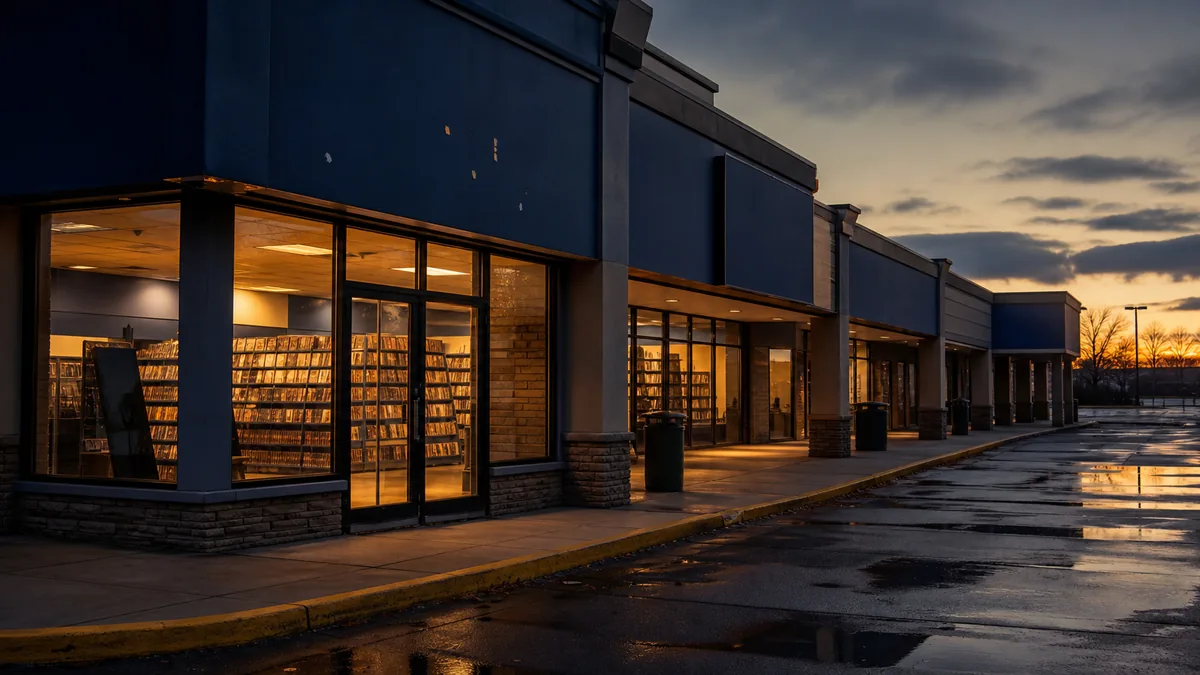
Blockbuster went from 9,094 stores and 84,300 employees at its 2004 peak to bankruptcy in 2010 — six years. For franchise buyers, the legal lesson is sharper than the business one: when technology kills a retail format, franchisees are contractually locked into that format — the build-out, the royalties, the approved business model — while the franchisor decides whether and how to pivot. Blockbuster’s franchisees had no vote on streaming strategy and no contractual exit when the strategy failed. The one store still operating today survives precisely because it is no longer run like a franchise.
Here is the verified history, and then the part that matters if you are evaluating a franchise agreement now.
The Verified Decline
Founded in Dallas in 1985, Blockbuster became the dominant video-rental chain in the world, built on big-box stores, deep inventory, and late fees. In 2000, Netflix co-founders Reed Hastings and Marc Randolph met with Blockbuster CEO John Antioco and offered to sell Netflix for $50 million; Blockbuster passed. (Antioco has confirmed the meeting and the offer, while disputing the “laughed out of the room” telling.) Blockbuster launched its own online DVD service in 2004 — the same year its store count peaked — but the subscription and streaming race went to competitors with no store overhead, while Redbox kiosks took the budget rental customer.
Blockbuster filed for Chapter 11 bankruptcy in September 2010. In April 2011, Dish Network won the bankruptcy auction with a bid valued at roughly $320 million (about $228 million in cash), acquiring the remaining ~1,700 stores. Dish closed the last ~300 company-owned U.S. stores by early 2014. Franchised and licensed stores hung on longer — until one by one they didn’t.
| Year | Event |
|---|---|
| 1985 | Founded in Dallas, Texas |
| 2000 | Declines to buy Netflix for $50 million |
| 2004 | Peak: 9,094 stores and 84,300 employees worldwide; Blockbuster Online launches |
| 2010 | Files Chapter 11 bankruptcy in September |
| 2011 | Dish Network wins bankruptcy auction (~$320M bid); ~1,700 stores remain |
| 2014 | Last ~300 company-owned stores close |
| 2018 | Bend, Oregon store becomes the last Blockbuster in the U.S. |
| 2019 | Bend store becomes the last Blockbuster in the world |
| 2025 | Bend store still operating, independently owned, licensing the name from Dish |
What Franchisees Could and Couldn’t Do
A franchise agreement sells you a format: an approved location type, build-out specifications, an approved product line, and an obligation to operate the system as written. That is the value of the deal in a healthy system and the trap in a disrupted one. Blockbuster-era franchisees illustrate three structural problems:
The format is locked, the market isn’t. Franchisees had signed long terms and financed large-footprint retail build-outs sized for a browsing experience customers were abandoning. Nothing in a standard franchise agreement lets a franchisee unilaterally shrink the store, change the product mix, or add an unapproved revenue line — those are defaults.
The pivot belongs to the franchisor. Online rental, streaming, kiosks — every adaptive move was corporate’s to make and corporate’s to fumble. Franchisees funded the system through royalties either way. When a franchisor’s pivot fails, franchisees absorb the decline without ever having controlled the strategy.
The brand can outlive its usefulness to you. After the bankruptcy sale, the trademark had a new owner with different priorities. Franchisees’ obligations ran on, but the system support a brand is supposed to represent — advertising, supply chain, innovation — was effectively gone.
The Bend, Oregon exception proves the rule
The last Blockbuster on Earth, in Bend, Oregon, opened in 1992 as a local Pacific Video store and is still independently owned by the same local family, with the same general manager since 2004. It survives by licensing the Blockbuster trademark from Dish Network on a yearly basis — a trademark license, not a franchise. That distinction is the lesson: the store sets its own strategy, sells its own merchandise, leans into tourism and nostalgia, and answers to no operations manual. The flexibility that might have saved other operators is exactly what the franchise structure didn’t permit.
Agreement Terms to Check Before You Buy
If the concept you’re evaluating could be disrupted within one franchise term — and ten years is a long time in any technology-adjacent category — read the agreement and FDD for format-change flexibility:
| What to check | Why it matters |
|---|---|
| Term length vs. market horizon | A 10–20 year term plus renewal conditions can outlast the format itself |
| Remodel and reimage obligations | Mandatory periodic refreshes mean reinvesting in a format even as it declines |
| Required product/service mix | Determines whether you can drop dying lines or add new ones without franchisor consent |
| Franchisor’s reserved rights | E-commerce, app, and delivery carve-outs often let the franchisor compete with your unit digitally while you hold the lease |
| System-change clauses | Most agreements let the franchisor change the system at your expense — look for any cap or cost-sharing |
| Exit ramps | Transfer rights, early-termination provisions (usually absent), and the cost of leaving before term’s end |
| Non-compete scope | Decides whether you can run an independent version of the business after exit, as the Bend store effectively does |
The FDD review questions from declining-system cases apply here too — Item 20 closure trends, Item 19 revenue direction, and franchisor financials — covered in our breakdowns of Cartridge World and Baja Fresh.
Frequently Asked Questions
Why did Blockbuster really fail?
Streaming and DVD-by-mail eliminated the trip to the store, kiosks undercut its prices, and Blockbuster’s own online pivot came late and underfunded. The 2010 bankruptcy followed years of revenue decline and heavy debt.
Is the last Blockbuster still open?
Yes. The Bend, Oregon store remains open as of 2025. It is independently owned and licenses the Blockbuster name from Dish Network year to year rather than operating under a franchise agreement.
Can a franchisee change their business model if the market shifts?
Generally not without franchisor consent. Franchise agreements require operating the approved system, and unapproved changes are defaults. Flexibility has to be negotiated before signing or obtained through amendment later.
Technology risk is now a standard part of franchise due diligence, and it lives in the agreement’s fine print as much as in the market data. Reidel Law Firm represents franchisees and franchisors on flat fees — from FDD review before you sign to exit strategy when the system stops working. If you’re weighing a franchise in a category that technology could reshape, talk to a franchise attorney first →